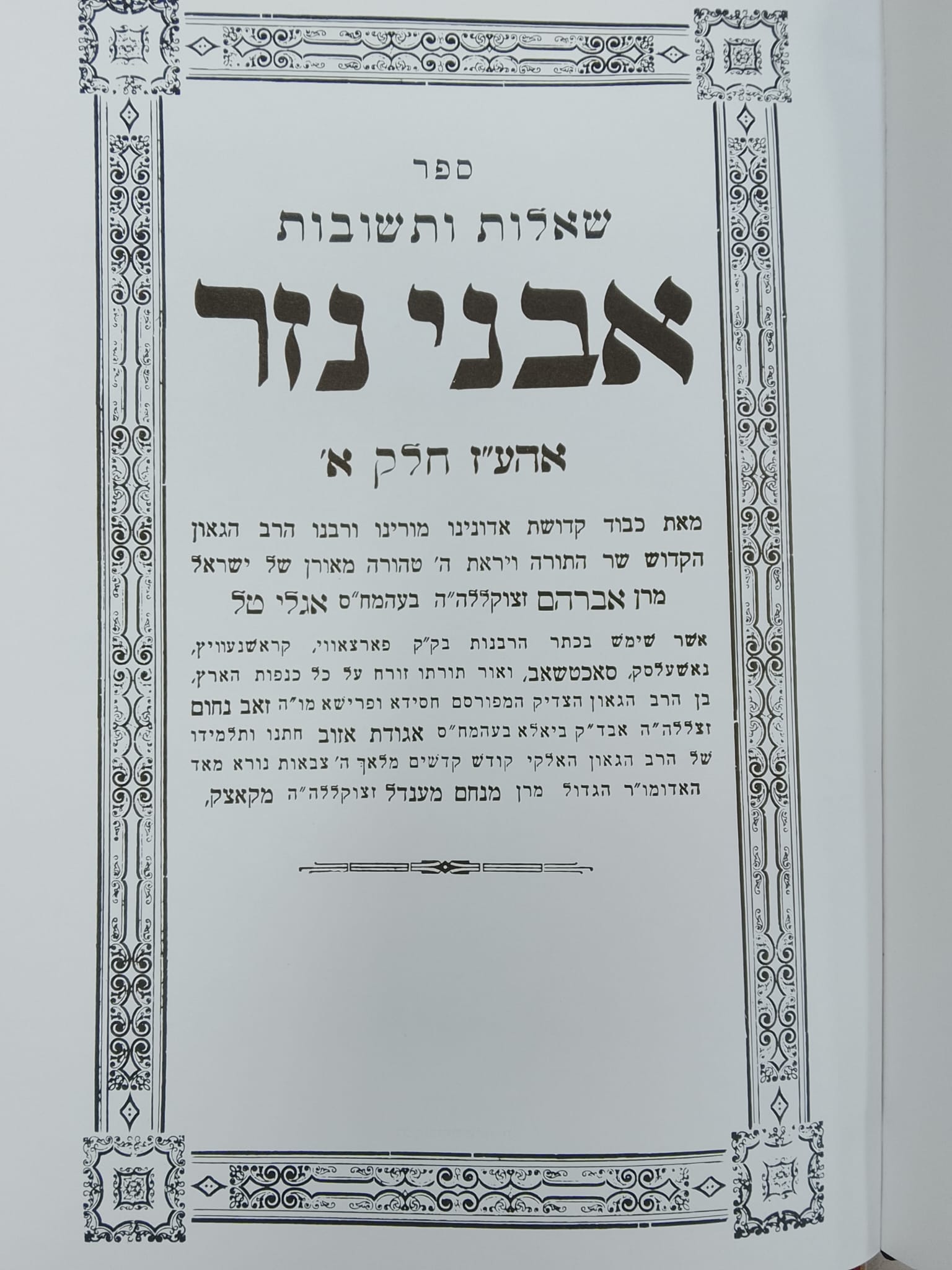
אבני נזר‚ אבן העזר י' (כל שלא כתוב בגמרא 'כופין' הכפייה פוסלת הגט במעושה)
PDF · 979 kB · 1/21/2026
 עברית
עבריתתקציר בעברית
בשו"ת אבני נזר, אבן העזר סימן י', דן בשאלה היכן מותר להפעיל כפייה כדי להוציא גט. הוא קובע כי בכל מקום שהגמרא לא אמרה במפורש "כופין", כל אמצעי כפייה שיופעל על הבעל - בין בידי בית דין ובין בידי גורם אחר - פוסל את הגט ועושה אותו "מעושה" (גט בכפייה אסורה), שדינו כגט פסול או בטל. מכאן יוצא כלל חמור: הרחבת הכפייה מעבר למה שהותר בגמרא איננה רק חטא, אלא פוגמת בעצם תוקפו ההלכתי של הגט.
English Summary
In Shut Avnei Nezer, Even Haezer siman 10, the author addresses where coercion may legitimately be applied to obtain a get. He rules that in any case where the Gemara does not explicitly state "we coerce," any pressure or coercion exerted on the husband - whether by the court or another party - renders the resulting get "me'useh" (improperly coerced), invalidating or voiding it. The conclusion is severe: extending coercion beyond what the Gemara permits is not merely a wrongful act but actually undermines the halachic validity of the get itself.
Résumé en français
Dans le Choute Avnei Nezer, Even HaEzer siman 10, l'auteur traite de la question de savoir où il est légitime de recourir à la coercition pour obtenir un guet. Il statue que partout où la Guemara n'a pas explicitement employé le terme « on contraint », toute pression exercée sur le mari — qu'elle vienne du tribunal ou d'un autre intervenant — rend le guet qui en résulte « meouss'é » (coercition illégitime), l'invalidant ou l'annulant. Il en résulte une règle sévère : étendre la coercition au-delà de ce que la Guemara autorise n'est pas seulement une faute, mais porte atteinte à la validité halakhique même du guet.