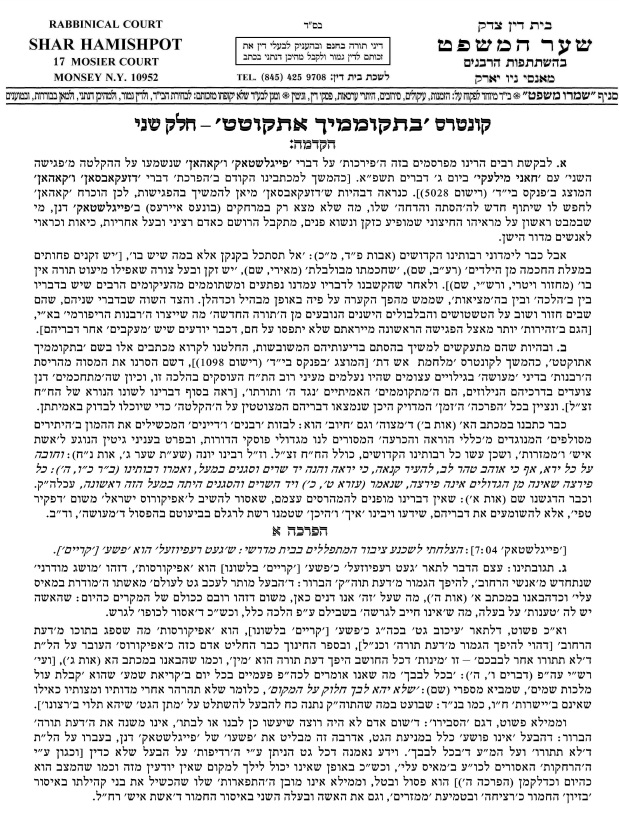
בתקוממך אתקוטט חלק ב (געשטעטנער)
PDF · 7340 kB · 1/17/2026
 עברית
עבריתתקציר בעברית
חלק ב' מחיבורו הפולמוסי של הרב אברהם שמואל יהודה געשטעטנער, 'בתקוממך אתקוטט', הכולל תשובות מפורטות לטענותיו של איש בשם 'פייגלשטאק' בעניין כפיית גט וענישת בעלים. המחבר טוען נגד ההיתר לנקוט 'הרחקות דרבינו תם' או צעדי כפייה כלפי בעל שאשתו תובעת 'מאיס עלי', ומביא ראיות מהראשונים שהרחקות כאלה כיום, בעידן הפרסום הציבורי, נחשבות אונס גמור הפוסל את הגט. החיבור כתוב בסגנון פולמוסי-הלכתי חריף המגנה את מתירי הכפייה.
English Summary
Part 2 of Rav Avraham Shmuel Yehuda Gestetner's polemical work 'Betkomemcha Etkotet,' containing detailed point-by-point rebuttals of claims made by a person referred to as 'Feigelstock' regarding coercing a husband to give a get. The author argues against permitting 'Rabbeinu Tam's restrictions' (hatza'ot) or coercive pressure against a husband whose wife claims 'mais alai' (he is repulsive to her), citing earlier authorities to contend that such pressure today, in an age of public exposure, amounts to genuine duress that invalidates the get. The work is written in a sharply polemical halachic style condemning those who permit such coercion.
Résumé en français
La deuxième partie de l'ouvrage polémique du rav Avraham Shmouel Yehouda Gestetner, « Bitkomemcha Etkotet », contient des réponses détaillées aux arguments d'une personne désignée comme « Feigelstock » concernant la coercition du guet et la sanction des maris. L'auteur s'oppose à l'autorisation de recourir aux « harhakot deRabbenou Tam » ou à des mesures coercitives contre un mari dont l'épouse invoque « mais alai », et cite des Rishonim pour soutenir qu'une telle pression, aujourd'hui, à l'ère de l'exposition publique, constitue une véritable contrainte qui invalide le guet. L'ouvrage est rédigé dans un style polémique et halakhique tranchant, condamnant ceux qui autorisent cette coercition.