 עברית
עבריתתקציר בעברית
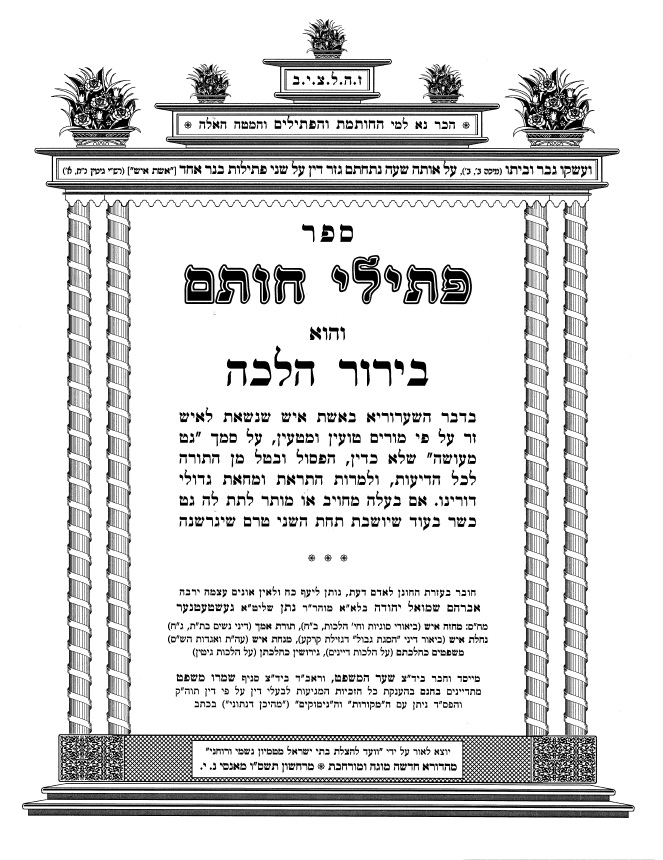
שו"ת בנידון גט מעושה. הקדמה) המצאת התירים על כל איסורים שבתורה ע"י פורקי עול גורם לחורבן התורה. 1) גט מעושה בטענת "מאיס עלי". 2) דין סרבן על הבעל. 3) אם האשה יכולה לבחור הבית דין לדון הבעל בכפיה. 4) אם סרבנות מתירה כפית גט. 5-6-7) דיחוי ההיתר. 8) בירור הדין של "תצא מזה ומזה". 9) אם נתקדשה לשני ולא נכנסה לחופה ולא נתיחדו. 10) אם נתקדשה לשני ולא נכנסה לחופה אבל נתיחדו. 11) נכנסה לחופה עם השני אבל לא נתיחדו. 12) נכנסה לחופה עם השני ב"חופת נידה"‚ אם נאסרת לשניהם ע"י זה. 13) אם האמתלא של "חופת נידה" הוא דין מרומה. 14) כשנישאת לשני ע"י הוראה מוטעת להיתר. 15) אם חחש טעימת ממזרים מחייב בעלה הראשון לגרשה אף כשהיא ממשיכה לדור עם השני?
English Summary
Responsa on the subject of a coerced get. The introduction argues that inventing halachic leniencies for every Torah prohibition by those who reject Torah authority leads to the destruction of Torah. The topics include: (1) a coerced get based on the claim of ma'is alai, (2) declaring a husband a get-refuser, (3) whether the wife may choose the beth din to compel her husband, (4) whether refusal justifies coercion, (5–7) postponing the proposed leniency, (8) the law of "she must leave both husbands," (9) betrothal to a second husband without marriage or seclusion, (10) betrothal with seclusion but without marriage, (11) marriage without seclusion, (12) marriage through a niddah chuppah and its consequences, (13) whether the "niddah chuppah" rationale is legally deceptive, (14) remarriage based on an erroneous halachic ruling, and (15) whether the possibility of mamzerut obligates the first husband to divorce her while she continues living with the second husband.
Résumé en français
Responsa sur la question du guet obtenu sous contrainte. L'introduction soutient que l'invention de permissions pour contourner les interdits de la Torah par ceux qui rejettent son autorité conduit à sa destruction. Les sujets abordés comprennent : (1) le guet forcé fondé sur l'argument de ma'is alai, (2) la qualification du mari comme récalcitrant au guet, (3) le droit de l'épouse de choisir le beth din chargé de contraindre son mari, (4) la question de savoir si le refus du mari justifie la contrainte, (5–7) le rejet de cette permission, (8) la règle de « elle devra quitter l'un et l'autre », (9) les fiançailles avec un second homme sans mariage ni isolement, (10) les fiançailles avec isolement mais sans mariage, (11) le mariage sans isolement, (12) le mariage célébré sous une houppa de nidda et ses conséquences, (13) la question de savoir si l'argument de la houppa de nidda constitue un raisonnement trompeur, (14) le remariage fondé sur une décision halakhique erronée, et (15) la question de savoir si le risque de mamzerout oblige le premier mari à la divorcer alors qu'elle continue de vivre avec le second.