מהריק שורש קב (בהרחקות צריך שיוכל ללכת לעיר אחרת)
PDF · 1.07 MB · 1/11/2026
 עברית
עבריתתקציר בעברית
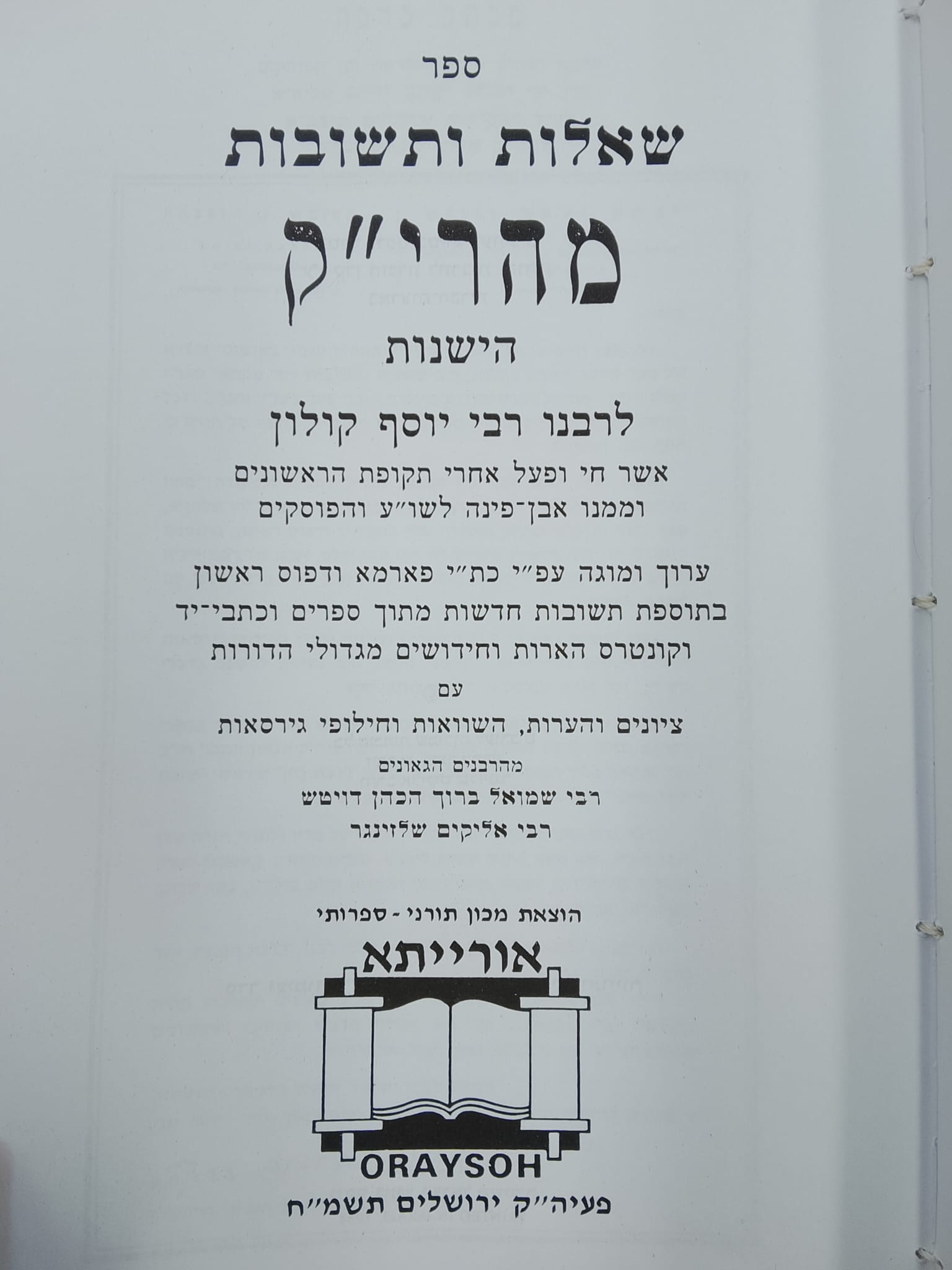
תשובת המהרי"ק (רבי יוסף קולון), שורש ק"ב, מתוך ספר שו"ת מהרי"ק. בתשובה זו דן המהרי"ק בדיני הרחקות (חרם דרבנו תם וכדומה) המוטלות על בעל המסרב לקיים את חיוביו כלפי אשתו, וקובע כי אף בהטלת הרחקות חברתיות-דתיות יש להיזהר שלא לשלול מהבעל את האפשרות לעבור ולגור בעיר אחרת. כלומר, ההרחקה אינה יכולה להיות גזירה גורפת החוסמת את חירותו המוחלטת של הבעל, אלא מוגבלת בהיקפה.
English Summary
A responsum of the Maharik (Rabbi Yosef Colon), shoresh 102, from Shut HaMaharik. The Maharik discusses the social/religious ostracism (harchakot, in the manner of Cherem D'Rabbeinu Tam) imposed on a husband who refuses to fulfill his obligations to his wife, ruling that such restrictions may not be applied so broadly as to prevent the husband from being able to relocate to another town. The harchakot must therefore be limited in scope rather than an absolute, total restriction on his freedom of movement.
Résumé en français
Cette responsa du Maharik (rav Yossef Colon), shoresh 102, extraite du Choute Maharik, traite des lois de mise à l'écart (harhakot, sur le modèle du herem de Rabbenou Tam) imposées à un mari qui refuse de remplir ses obligations envers son épouse. Le Maharik établit que même en imposant de telles restrictions sociales et religieuses, on doit veiller à ne pas priver le mari de la possibilité de s'installer dans une autre ville. La mise à l'écart ne peut donc constituer une mesure générale qui annihile totalement la liberté du mari, mais doit rester limitée dans sa portée.